

The Adult Beginner’s Guide to Learning Piano in NYC
You’ve been thinking about learning piano for years.
Maybe you grew up around music but never had lessons. Maybe you played as a kid and want to start again. Or maybe you’ve always loved the sound of the piano in jazz chords, film themes, classic pop ballads, and you’re finally ready to do something about it.
If you’re an adult in NYC, you’re in an unusually good position: there are world-class teachers, flexible lesson options, practice studios you can rent by the hour, and an endless supply of live music to inspire you.
The only tricky part is knowing how to start without getting overwhelmed.
This guide covers exactly that; how to begin, what to buy, where to practice, how to choose a teacher, and what progress realistically looks like in your first 90 days.
1. Start with the right goal (not the “perfect” goal)
Adult beginners do best when the goal is clear and personal. Instead of “I want to be good at piano,” choose something more specific, like:
- Play 3 songs you love from start to finish
- Learn basic chords so you can sing along
- Read simple sheet music comfortably
- Play a few jazz standards with left-hand shells
- Build a calming daily practice routine after work
In NYC, time is the real currency, so your goal should match your lifestyle. Music teachers at piano lessons NYC often recommend a simple approach: a repeatable 15-minute routine that prioritizes rhythm, control, and one problem spot.” If you can practice 10 minutes, 4–5 days a week, you can make real progress fast. If you can only do two longer sessions a week, that works too. You’ll just structure things differently.
2. Choose a piano setup that fits NYC living
Space, neighbors, and budget matter here more than almost anywhere.
Digital piano (recommended for most NYC beginners):
- Lets you practice with headphones (huge win for apartment life)
- Usually cheaper than acoustic, with consistent sound
- Easier to move if you relocate
Look for:
- 88 weighted keys (this matters—avoid “semi-weighted” if possible)
- A sustain pedal (even a basic one is fine to start)
- A stand and bench that keep your posture comfortable
Acoustic piano (amazing, but higher commitment):
- Rich sound and feel
- Better for certain styles and touch development
- But: tuning, moving costs, space, and neighbor noise are real factors
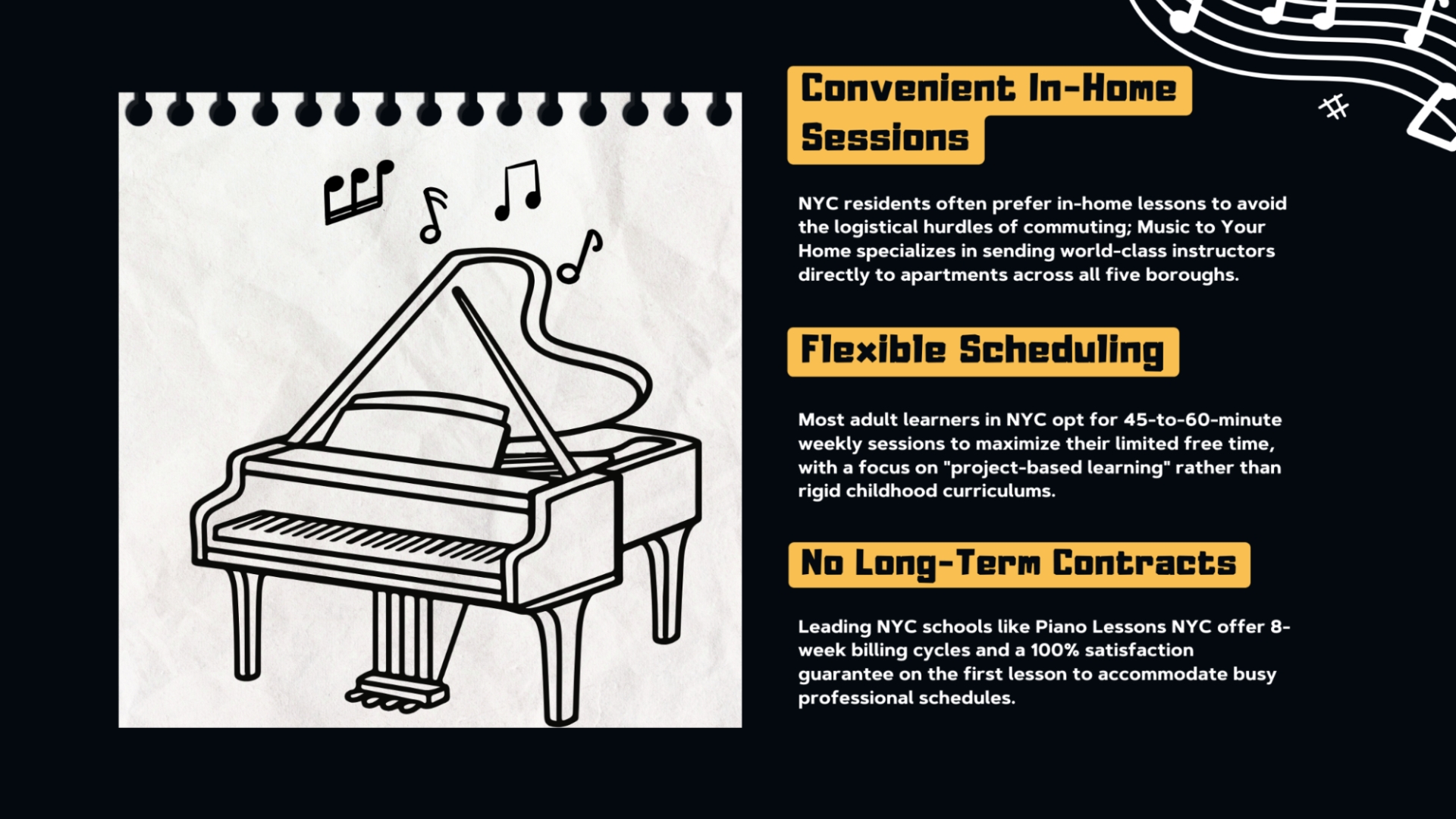
A good middle ground for many NYC learners is: digital at home + occasional practice on an acoustic (in a studio or rehearsal space) once you’re more comfortable.
3. The NYC beginner’s secret weapon: practice studios
If your apartment setup is limited, or you just focus better outside; NYC has plenty of hourly practice rooms.
This is also a great solution if:
- You don’t want to buy an instrument yet
- You’re not ready to commit space at home
- You want a real acoustic piano experience
When choosing a practice space, prioritize:
- Clean, quiet rooms
- Reliable scheduling
- A piano that’s reasonably maintained
- Easy commute (because convenience = consistency)
Even one session a week in a practice room can supercharge your learning after a break, especially early on when you’re building confidence.
4. Should you learn with apps, YouTube, or a teacher?
All three can work; but they’re not equal. Apps & YouTube are great for:
- Getting started quickly
- Learning simple songs
- Building basic coordination
- Supplementing your lessons
A teacher is best for:
- Correcting technique before bad habits lock in
- Helping you read music and understand rhythm
- Customizing your learning path
- Keeping you accountable (especially in a busy city)
If you can budget for it, the most effective setup for adult beginners is often:
- 1 lesson per week (or every other week)
- Short daily practice sessions
- Apps/videos used as “homework support,” not the main plan
5. How to choose a piano teacher in NYC (without overthinking it
NYC has a huge range: conservatory-trained teachers, gigging jazz musicians, pop accompanists, music school instructors, and hybrid online/in-person coaches.
A good beginner teacher should:
- Make you feel comfortable asking “basic” questions
- Teach you how to practice (this is everything)
- Explain rhythm clearly
- Spot tension in your hands/wrists/shoulders
- Give you small wins every week
Ask these questions before booking:
- Do you teach adult beginners often?
- What method do you use (or do you customize)?
- Can we mix songs I love with fundamentals?
- Do you teach reading + chords, or focus on one?
- What should I practice between lessons?
Green flags:
- They ask about your goals and schedule
- They don’t shame you for being a beginner
- They show you how progress happens week to week
6. A simple 20-minute practice plan that actually works
A lot of adults quit because practice feels vague. But a simple 20-minute practice session that actually works” right before you introduce your Minute 1–20 structureHere’s a beginner-friendly structure:
Minute 1–3: Warm-up
- Five-finger patterns, light scales, or simple finger exercises
- Keep shoulders loose, wrists relaxed
Minute 4–8: Rhythm + reading
- Clap rhythms
- Play a short reading line hands separately
- Count out loud (seriously—do it)
Minute 9–15: Your main piece
- Small section only (like 2–4 measures)
- Slow tempo, correct notes, steady rhythm
Minute 16–20: Fun play
- Chords, improv, a favorite song snippet, or repeating something that felt good
- Consistency beats intensity. In NYC life, “small daily reps” is the advantage adults have.
7. What progress looks like in the first 90 days
A realistic timeline helps you stay motivated.
Weeks 1–2
- Learn posture, hand shape, basic rhythm
- Start reading simple notes (or basic chords)
- Play tiny pieces hands separately
Weeks 3–6
- Improve coordination
- Play short pieces hands together (slowly)
- Learn 3–5 basic chords (if you’re going the chord route)
Weeks 7–12
- You’ll have a few complete pieces you can play
- Your rhythm becomes steadier
- You’ll start recognizing patterns in music (a big moment)
The big unlock: you stop feeling like you’re “pressing random keys” and start feeling like you’re making music on purpose. “If you’re going the chord-first route, start small, these 4 chords you really need to know will cover a shocking amount of popular music.”
8. Common adult beginner mistakes (and how to avoid them)
Mistake 1: Practicing too fast
Fix: start painfully slow. Speed comes automatically later.
Mistake 2: Only playing from the beginning
Fix: practice the hard bar 10 times, not the easy intro 50 times.
Mistake 3: Holding tension
Fix: frequent micro-breaks, relaxed wrists, shoulders down.
Mistake 4: Waiting for “more time”
Fix: schedule practice like a meeting; 20 minutes is enough.
Final thoughts: You don’t need talent; you need a system
Learning piano as an adult isn’t about being “naturally musical.” It’s about building a routine that fits your life and getting the right guidance early so you don’t waste months guessing.
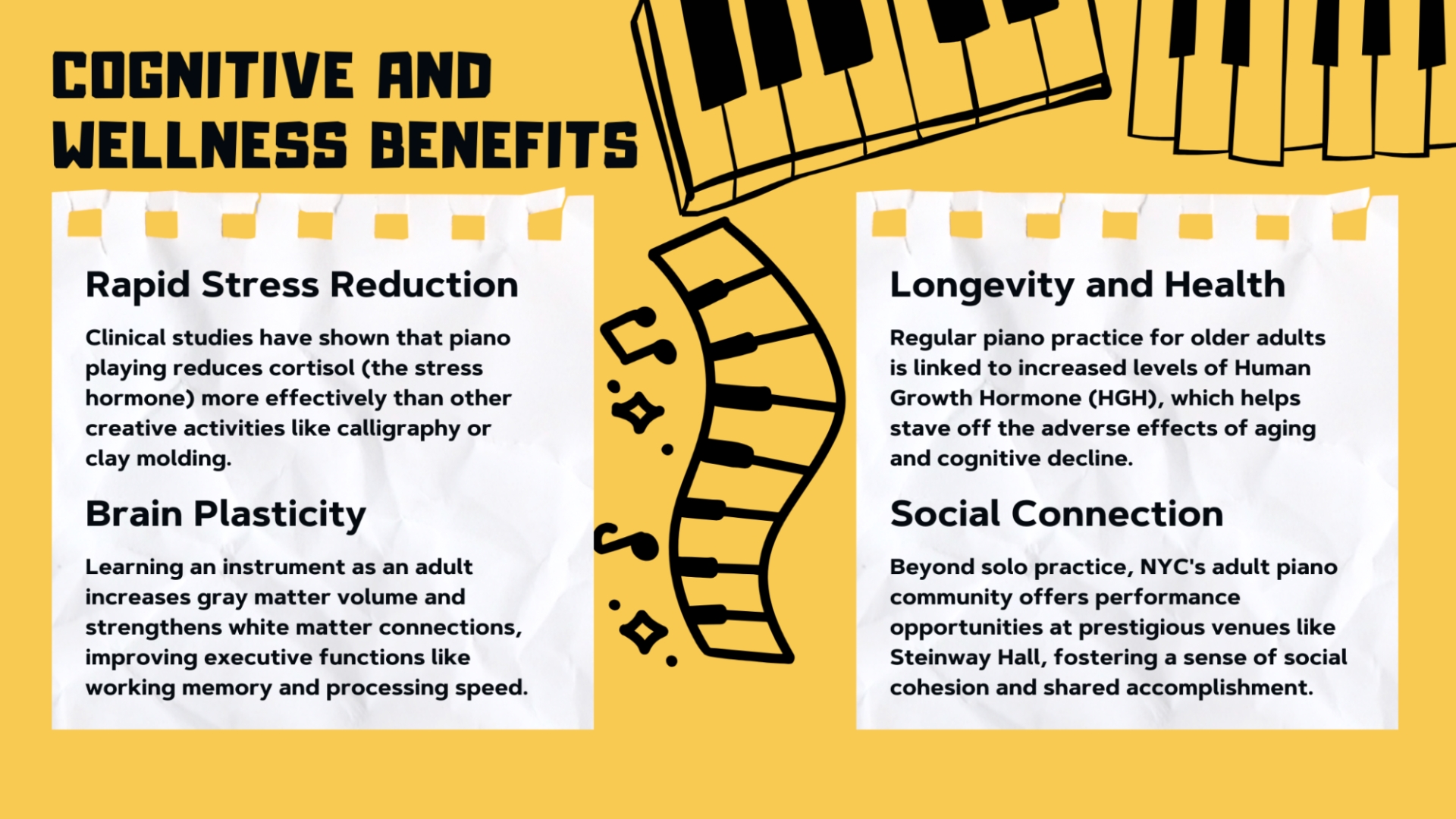
NYC is full of noise, rush, and pressure. Piano can become the opposite of that; a daily practice of focus, calm, and growth. Start small, stay consistent, and let the city’s music culture fuel you as you go.
If you’ve been waiting for a sign to start; this is it.