


Determining Whether an AI Singer Has Taken Part in a Music Track
Synthetic voices in songs are far from rare occurrences. For instance, a music producer may experiment with a chorus sung by a virtual voice, or a songwriting team may create a vocal sample and use it for a new song. They usually sound pretty good, even with layers of instrument sounds and background vocals on top. It takes some practice to learn how to identify these songs among other recordings.
It is especially helpful to detect artificial vocals when dealing with unknown recordings, vocal samples, or songs you heard somewhere online. AI music detector: is this song AI? would give extra hints if you were not sure where the singer is from. There are many factors to consider when it comes to the automated detection, but the way a singer pronounces certain words is an essential feature to listen to.
AI-Generated Vocals
In modern voice synthesis programs, it is possible to recreate various properties of the singer’s voice. They can create vocals that take into account pitch, timing, breathing, and emotional qualities. There are programs that generate full voice tracks using text and melodic instructions. Other programs transform voice from any record into another voice.
There are several interesting features to mention about AI-generated vocals. Firstly, it is intriguing to consider the way a singer pronounces each word. Human singers pronounce words according to the melody, tempo, and emotions. The same word at the beginning of the verse will be pronounced in a different way during the chorus.
Synthetic vocals can preserve an unusually consistent pronunciation. Consonants can be precisely placed, and vowels can be steady during the notes. Some syllables can sound detached from the whole phrase.
There are also useful signs that can be found in relation to breathing. It should be noted that singers take time to breathe, and these breaths form a part of their performance. In some of the generated audio files, it turns out that breathing sounds are in odd places or even absent at all when there is an especially hard part of the song.
The emotional performance is another important aspect that can reveal the source of an audio file. Human singers usually include various details in their performance unconsciously. Their voice may sound rough while performing an especially powerful phrase or become somewhat weak near the end of a phrase. The same can be reproduced by AI vocals, however, the changes sometimes contradict the sense of the lyrics.
Nevertheless, none of the described signs can prove the fact of AI creation alone. Skilled producers make great use of pitch correction, vocal comping and editing.
Identifying AI Vocals in Streaming Tracks
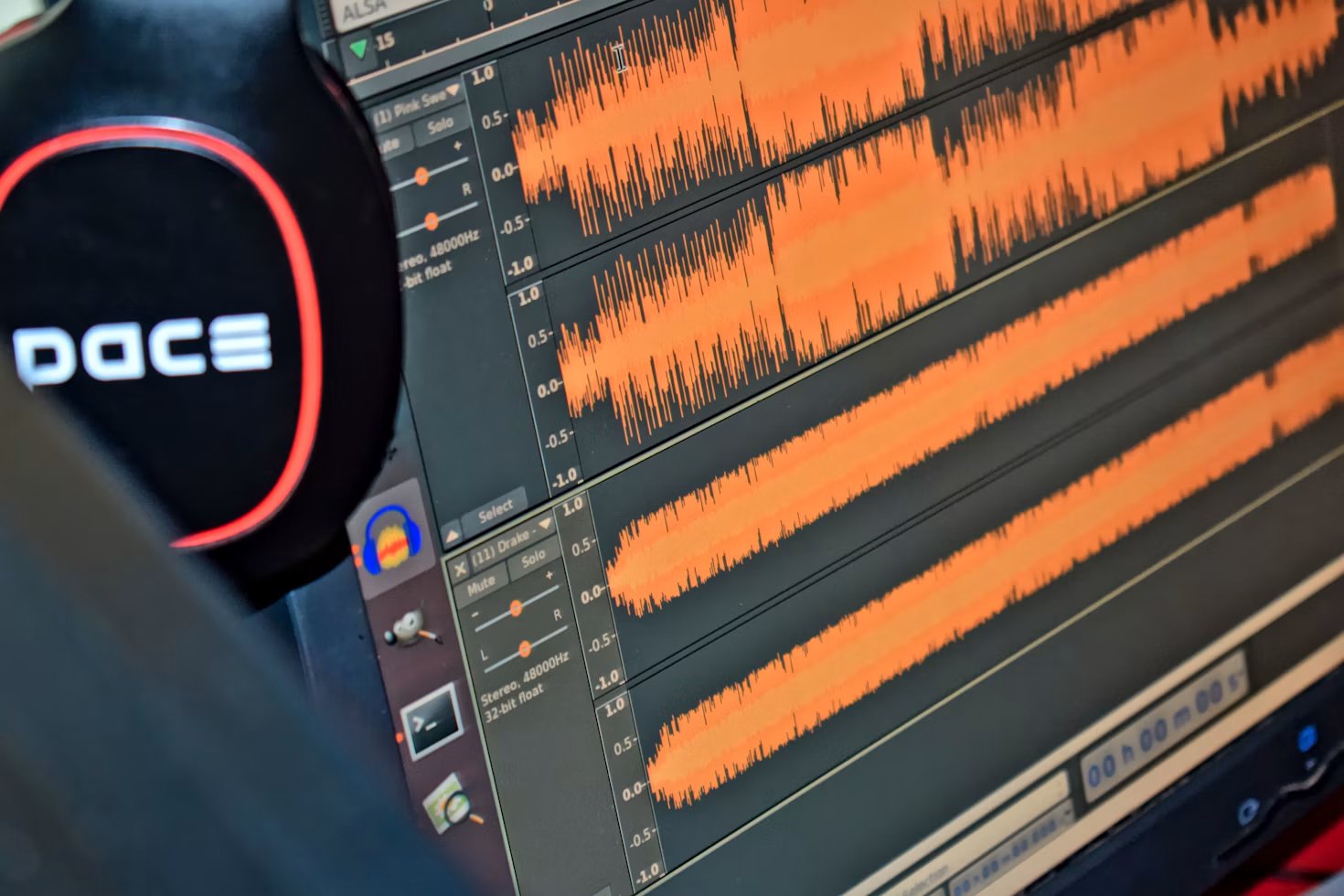
The recordings in streaming services result from various production processes. Artists sometimes inform their listeners of the use of generative technologies; in other cases, not much is said about their creative process.
The presence of a song on Spotify, YouTube Music, and SoundCloud will not indicate if the song’s vocals were obtained via a recording or a voice generator. Descriptions may be useful, especially if the artist refers to the use of artificial vocals or AI technology.
In the case of an unknown recording, there are several points worth noticing:
- Vocal texture repetition. Observe if the singer employs the same vocal elements through phrases, where there would be a need for modulation.
- Word ending anomalies. Listen if there are missing consonants, elongated consonants, or those that do not match the tune.
- Respiration technique. Note if the vocalist takes breaths in a musical manner.
- Accent irregularities. Check if there are accent changes or strange pronunciations within words.
- Transitions. Take note of transitions from soft phrases, high-pitched tones, and vowel sustains.
Headphones may help you notice these details. Repetition of a brief excerpt many times may reveal information that is otherwise not apparent when listening through the entire track. The compression applied during the streaming of the track may hide certain details too. Whenever possible, look at the high-resolution version of the recording.
Checking Sample Packs and Vocal Demos
Sample packs pose other challenges. Music producers often use samples from various sample packs, including vocal loops, one shots, and melodies. One could include a short vocal sample into the track without making any references to the artist.
Before applying any new vocal sample, it is recommended to check the description and licensing information of the sample pack. There may be sample packs where the synthetical voices are clearly indicated. At the same time, there may be samples where the term royalty-free vocals or vocal phrases is used.
The difference is that the process of recording may vary, which implies a different set of rights to use such materials.
The reviewing process should include the following steps:
- Do not apply any effects to the vocal until after listening to the isolated vocal itself.
- Consult the sample pack description for details on where the vocals are sampled from.
- Listen for long tones and tricky pronunciation of some consonants.
- Be sure to consult the license agreement for possible commercial distribution.
- Talk to the author whenever there are uncertainties regarding the origin or licensing terms for use of the vocal samples.
The same considerations also apply to demos. For example, picture an independent artist submitting to a music producer a demo with a very convincing lead vocalist. Everything is mixed perfectly; even the vocalist performs perfectly and tells the story through singing. However, during the actual production phase, the artist tells the producer that the vocals were computer-generated in order to try the song out.
Why Listening Alone Is Not Enough to Identify AI Vocals
The most challenging aspect of detecting AI vocals is that the current music production process is highly manipulative. A human vocalist can perform multiple takes, combine them with the best phrases, alter pitch and timing, apply processing to eliminate natural flaws, and achieve a result that resembles AI vocals.
AI vocals can be processed as well. Saturation, reverberation, compression, and background harmonies can be added to improve their sound.
Voice conversion makes the situation even more complicated since the human singer can perform the melody and provide all the timing information, while the computer changes the vocal identity. A human performance becomes part of the synthetic recording in addition to the synthesized voice elements.
Detecting such recordings requires analyzing certain patterns in audio signals that are indicative of the use of generated content. The ability of the system to correctly detect the recording depends on the quality of training and the type of audio recording itself. Short audio clips, intense processing, and different ways of generating the voice create difficulties for analysis.
For listeners, the correct way would be to collect a few pieces of evidence. They could include information provided by artists themselves, credits, information about samples, listening attentively, and automated detection.
For producers, the most important step is to document the origin of vocal sounds. A simple description of the project can be very helpful when the track approaches the distribution stage.
Generated AI vocals have already become a part of everyday musical productions. Knowing how these voices are produced, identifying signs where they might occur and validating the sources of these voices allows musicians to make more educated decisions. The idea is not to become suspicious about every clean voice track. Instead, it is important to be aware of what is included in your recordings.